
The Home page of your website is just that… it’s “home”. Most of the time, it’s where you drive your website visitor traffic from paid social media ads, organic posts, e-mail series, printed marketing collateral, and even from your business card! That’s why we made such a big deal about the curbside appeal of your Home page in a previous blog post.
Next, we gave you a big blog post about your About page and what it should really be about… and it’s not just about you!
Now, it’s time to hit another highly visited page on your website… the Services page (can also be known as a Product page).
Jump Back
Before we get into specifics, let’s step back in time just a little. Remember when people went door-to-door selling everything from encyclopedias to kitchen gadgets? Well, that salesperson probably didn’t bring their entire line of products with them to the neighborhood, nor did they just sit in someone’s living room and tell about all the cool stuff their company sold.
Nope, they brought a few of their best shiny objects to show off and then opened a beautiful catalog with pictures, descriptions, prices, and a big, long order form.
Though your entire website is your “catalog”, your Services page is where you show off and describe your shiny objects — what you actually sell.
Pages with a Purpose
If your website pages are doing what they’re supposed to do, your site visitors have checked you out, know a little about you, and are ready to discover more about the products and services you offer. They want to see the different packages or options and possibly some pricing info if you choose to include that.
Your Services page takes the concepts, promises, and stories you’ve been sharing with your prospects and brings it down to the details of what THEY can choose from when they CHOOSE to do business with you! Even if you only offer customized services, spell that out on your Services page so the reader can begin to visualize themselves deciding, purchasing, and working with you.
How does this look?
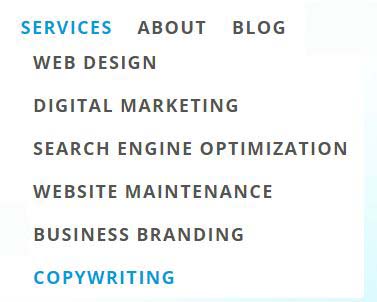
- One Services Tab with Dedicated Inside Pages If you offer multiple products and services, each needs to have a dedicated “inside” page under the services tab. This is good for your site visitors because they can get just the information they’re looking for without having to search a ridiculously long page. Inside pages are better for your SEO, too, so this strategy is a win-win!

- Strong Headlines We’ve said it before and we’ll say it again — each page of your website needs a strong headline. A headline is the “ad” for the page and it’s what compels the reader to stay on that page to find out more. You will also want a sub-headline to describe your services further. Check out Fingerprint Marketing’s Services page and see for yourself how important the headline and sub-head descriptors are.

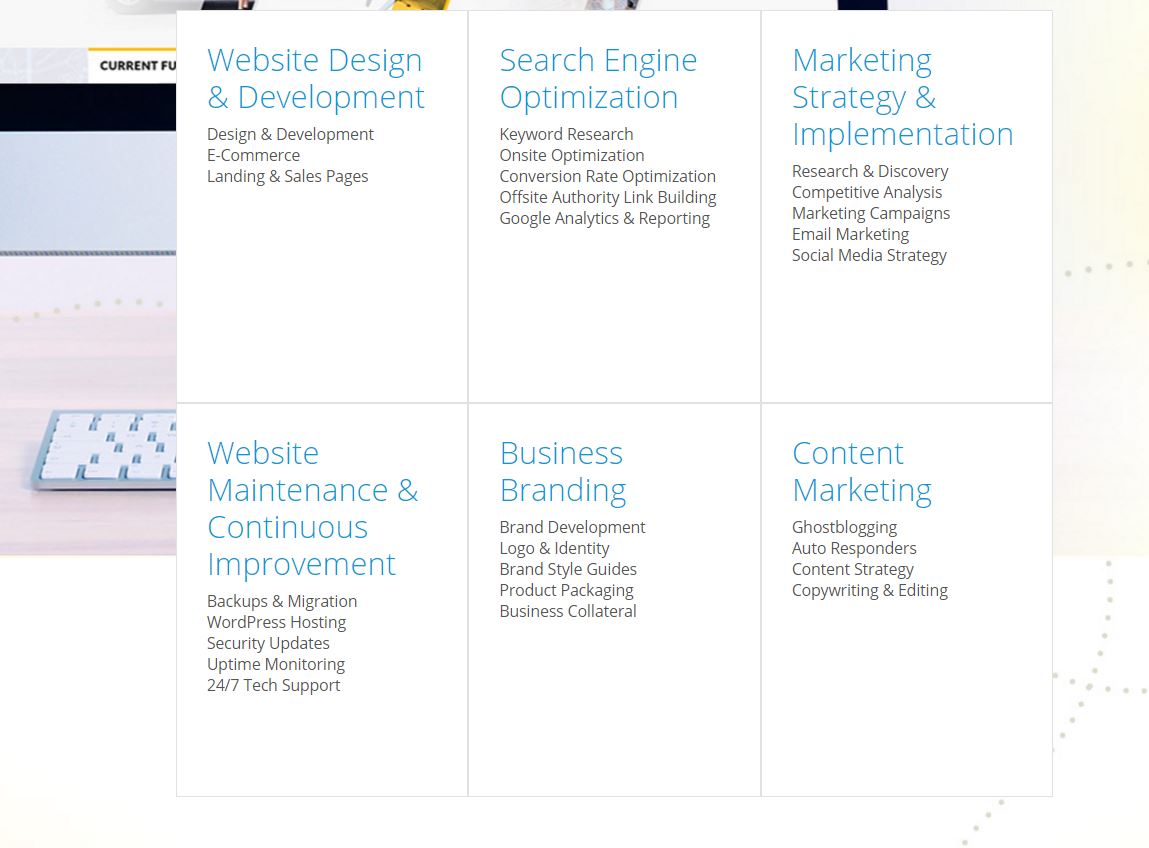
- Sections As you decide on the design of your Services page, make sure that it’s divided into sections and each product or service has a clear title and description. Now, two things can happen in each of these sections, depending on how much you want to say. You can put the title, description, and price right there for all to see or you can make that section link to a more detailed page. This really depends on what you’re offering and how much detail is needed.Again, we’ll refer to our own Services page. What we do (help your business get qualified leads and more clients by building proven money-making websites with kick-ass brand experiences) entails lots of info so each of the sections opens up a new “inside” page with all of the details. This allows the main Services page to stay neat and tidy and allows the prospect to easily click and go right where they want to go.

- Now What? You just warmed up your prospect even more by showing them what you’ve got to offer… now don’t leave them standing there all alone! What should they do next? Assuming the reader knows what action to take next can be a deadly error. Tell them what to do and where to go from here. What’s the ONE (yes, just one!) call to action they should take no matter which product or service they’re now very interested in? Should they book a consultation with you? Push a buy button? Make a phone call? Here is the question that SHOULDN’T be rattling around in their head at the moment: “What am I supposed to do now?” Our advice: Make it so easy to do business with you that your prospect can’t help but do business with you.

- Benefits Another thing we can’t say enough… don’t just describe your products and services, tell your reader what all of these wonderful things can do for them and how working with you will help solve the problem or pain they are experiencing. That’s why and how they found you… they’re looking for a solution to a problem, so show them the solution is right in front of them!

- Bonus Tips
- Think about your target audience. Are they readers? Would they rather see videos? Do they want a lot of detail or just a little? Is what you do and offer obvious or do you need to explain it a bit more?
- Start to take notice of the Services page on websites you visit frequently and the sites of businesses you compete with. This will give you a great feel for what works and what doesn’t for your own Services page.
- Your Services page should provide details, but be careful not to let those details become overwhelming, cumbersome, boring, time-consuming to read, or irrelevant.

Let’s make this a two-way conversation! Contact us and let’s talk more about creating your “catalog” and making it irresistible to your ideal customers and clients.